aidactic.

AI training for everyone.
Beginner to frontier.

Interactive and animated lessons
on the hottest topics in AI.

Free. Certificate when you finish.

A look inside AIdacticAnimated lessons. Questions. A deeper understanding.

What you could actually do with it.

Workers

The tools are turning up in your job whether or not anyone explains them. Learn what they actually do, where they help, and where they get things wrong — so you are the person in the room who knows.

  • Beginner Draft and rewrite emails, and summarise long documents you do not have time to read.
  • Intermediate Build a prompt you reuse every week for the reports you always have to write.
  • Advanced Connect AI to the files and systems you already use, so it works from your real data.
  • Frontier Hand a whole recurring task to an agent, and spend your time checking its work instead of doing it.


Managers

Your team is already using AI. Know what good use looks like, what to ask about an answer you cannot check yourself, and where the risk actually sits.

  • Beginner Summarise long threads and documents, and get to a decision faster.
  • Intermediate Draft plans, briefs and reviews from your own notes, then edit instead of starting blank.
  • Advanced Clear out your inbox with an agent that handles the routine and escalates the rest.
  • Frontier Build a reporting system that pulls from your tools and writes the weekly update itself.

Teachers

Understand the technology your students are using before deciding how you want to use it in your classroom. Then use it yourself, for the work that takes your evenings.

  • Beginner Generate lesson plans for your class.
  • Intermediate Produce your own media — images, video and podcasts — for your course content.
  • Advanced Set up AI agents that answer student questions in real time.
  • Frontier Create custom learning systems for what you teach.

Students

Use AI in a way that still teaches you something — and know where the line is before someone else draws it for you.

  • Beginner Ask for an explanation at the level you are actually at, and check it against your notes.
  • Intermediate Turn a reading into practice questions, and get real feedback on your own writing.
  • Advanced Build things with it — code, data analysis, visuals — for your coursework and your portfolio.
  • Frontier Run a research project with AI doing the searching while you do the judging.

Small business

You do every job in the business yourself. These tools take back the hours that go on writing, admin and chasing — without hiring anyone.

  • Beginner Write your listings, quotes, replies and posts in a fraction of the time.
  • Intermediate Make your own product photos, ads and short video without hiring anyone.
  • Advanced Put an assistant on your site that answers customer questions and books work.
  • Frontier Automate quoting, invoicing and follow-up so the admin runs without you.

Public service

Learn the tools, the rules that apply now, and what you need to be able to explain about a decision afterwards.

  • Beginner Summarise long reports and briefing material, and draft plain-language responses.
  • Intermediate Search across your own policy and guidance documents and get answers with sources.
  • Advanced Build tools that let the public get a straight answer without waiting for a person.
  • Frontier Design services where AI drafts and a person decides, with a record of both.

Shorts

Key AI topics and tools in three to four minutes.

All shorts

3 min 14

Agents

What an AI agent is: a model given a goal, tools it can call and a loop of deciding, acting and observing; how that differs from a single reply, where the loop goes wrong, what a person should decide before letting one act, and why people disagree about the word.

2 min 47

Reasoning

What a reasoning model is, why writing out intermediate steps tends to help on multi-step problems, what the visible steps are and are not, when the extra steps cost more than they give, and how to check a shown chain of steps.

2 min 54

Transformers

How a transformer, the neural network design behind many large language models, turns text into tokens and vectors, lets each token weigh the others through attention, stacks layers to end in a probability for the next token, and why the cost of attention bounds how much text a model can take in at once.

3 min 10

Tokens

What a token is in a language model, how a tokenizer cuts text into pieces drawn from a fixed vocabulary, why the same sentence takes different numbers of tokens in different languages, why context length and usage are counted in tokens, and how tokenization contributes to mistakes with spelling and arithmetic.

3 min 13

Embeddings

What an embedding is, how a piece of text becomes a point in a space where nearby points have similar meaning, how vector search finds the points nearest to a question, and why a close match in meaning is not the same as a correct one.

3 min 17

Deepfakes

What a deepfake is (synthetic or altered audio, image or video of a real person made by a generative model), why one is now cheap to make, the three common harms, why looking harder at the pixels is the wrong instinct, and the checks that work instead: call back on a known number, a family code word, tracing the source, reverse image search and content credentials.

2 min 59

Fine-tuning

What fine-tuning is, how continuing to train a model on your own examples differs from prompting and from retrieval, what it suits and what it does not, and what it costs in data and testing.

3 min 15

Context

What the context window of a language model is, what counts toward it, why its size is limited, what happens when a conversation outgrows it, why fitting in the window does not mean every part is used equally well, and what a careful user does about it.

2 min 59

Training

What training a language model involves: pre-training on a very large body of text by predicting the next token, then post-training on examples and preferences that shape how it responds, how the character of the data shapes the output, what training does and does not store, and why using people's writing to train models is contested.

2 min 53

Distillation

What distillation is: how a small AI model is trained to reproduce the outputs of a large one, what the small model gains and cannot exceed, and why a provider's terms of service can matter to how it is trained.

3 min 19

Quantization

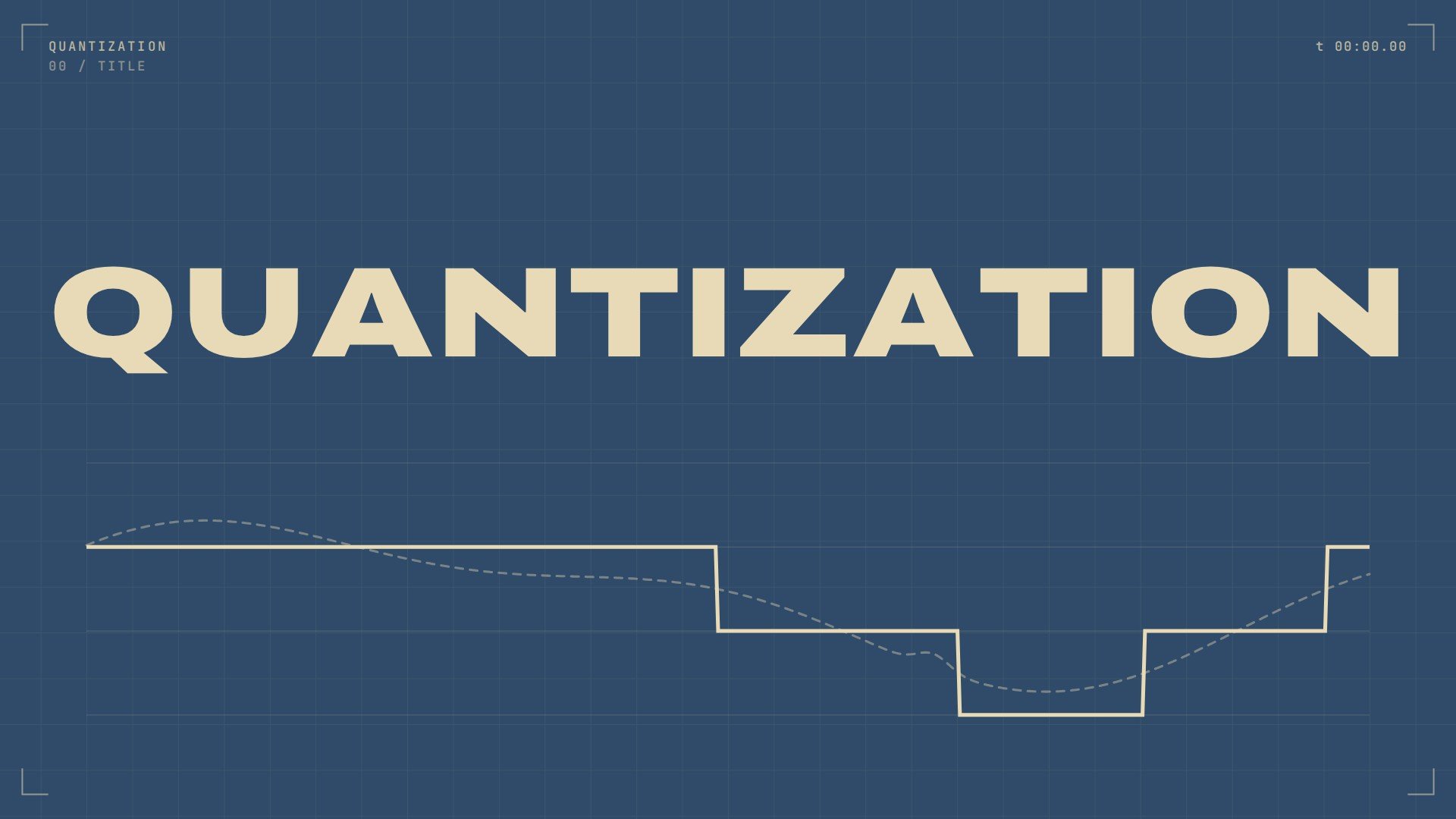
How quantization stores a model's parameters with fewer bits per number to save memory and time, what rounding costs and where it matters more, and why the result should be tested on your own task.

2 min 44

Superintelligence

What the word means, the three kinds one philosopher distinguishes, why goals and capability are separate questions, and why the idea itself is argued over.

2 min 55

Foom

What 'foom' means: the idea that an AI able to improve itself could go from human level to far beyond it very quickly, and the long-running disagreement about whether such a takeoff would be fast or slow.

2 min 40

RAG

What retrieval-augmented generation is: how an assistant answers from your own documents by searching them first, why that lowers errors without removing them, and what to check in a cited answer.

3 min 11

Diffusion

How many image and video generators make a picture: noise is added to images step by step in training, then removed step by step to generate, steered by a text description.

3 min 8

Hallucination

Why an AI assistant can state something false with complete fluency, what is happening inside the model when it does, and what reduces it without removing it.

2 min 59

Jailbreaking

What it means to get an AI assistant past its own rules, why that is hard to prevent, how it differs from prompt injection, and why it matters to anyone who puts an assistant in a product.

3 min

Emergence

What 'emergent abilities' means for large models, the disagreement about whether abilities jump or the way we score them does, and what to ask when you read the word.

3 min 8

AGI

What the term artificial general intelligence means, the different ways people define and measure it, and why the question 'is this AGI?' cannot be answered until a definition is stated.

2 min 33

ChatGPT

What the assistant most people meet first actually is, what it is good at, where it gets things wrong, and what it costs to start.

Start where you are.

The published courses run in order as one masterclass, AI for Everyone — 2 courses, 10 lessons.

The course trailer

In this course

  1. The World of AI Right Now
  2. Why AI Is Moving So Fast
  3. How AI Actually Works
  4. What AI Means for Your Life and Work
  5. AI Scams, Security, and the Law

Beginner, part of AI for Everyone

AI and You

What AI actually is, why it got good so fast, and what it means for your work — plus how to spot the scams that now use it.

Level
Beginner
Lessons
5
Variations
Everyone, Teachers, Students, Managers, Public service, Small business
Cost
Free
Access
Sign in to take it

The course trailer

In this course

  1. Growing Up with AI
  2. Learning with AI, Not Instead of It
  3. Make Things with AI
  4. AI and Your Future Career
  5. Check Before You Trust It
  6. AI Friends and Feelings
  7. Fakes, Scams and Your Image
  8. Your Family's AI Plan

Beginner, part of AI for Everyone

AI for Teens and Parents

One course, two views: teens learn to use AI well and safely, parents learn how to help. It ends with a family AI plan.

Level
Beginner
Lessons
8
Cost
Free
Access
Sign in to take it

The course trailer

In this course

  1. The Art of Prompting
  2. Creating Media With AI
  3. Catching AI's Mistakes
  4. Building Tools and Apps
  5. Introduction to AI Agents

Beginner, part of AI for Everyone

Working with AI

Direct it, check it, make things with it. Five lessons on getting real work out of AI — including how to catch it when it is confidently wrong.

Level
Beginner
Lessons
5
Variations
Everyone, Teachers, Students, Managers, Public service, Small business
Cost
Free
Access
Sign in to take it

The course trailer

In this course

  1. The AI Opportunity: Where It Is and Where It's Heading
  2. Your AI Playbook
  3. Leading the Change, Safely
  4. The AI-Native and Agentic Business

Intermediate, part of AI for Everyone

AI for the C-Suite

Four fast lessons for the executive who has to decide: the landscape now, a playbook, leading the change safely, and the agentic business.

Level
Intermediate
Lessons
4
Cost
Free
Access
Sign in to take it

See all courses

AIdactic wants to democratize learning on AI so that everybody can benefit from this AI revolution.

We make high quality interactive online learning, and we are building it to personalize to your profession and to you individually.

Our training is free of charge.

Start with the first lesson.

The courses are free. The films need no account at all.